


What Couples in Germany
Actually Choose
Thousands of real orders analyzed—what couples in Germany actually choose when it comes to wedding rings.
The moment when two people choose their wedding rings feels unique. And it is. But it follows patterns that have emerged from thousands of such decisions. Fischer Trauringe has analyzed what couples in Germany have actually ordered: not a trend forecast, not a survey, but real purchasing decisions based on thousands of orders.
Here are the results.
585 Yellow Gold: The Most Popular Alloy in 2026
For a long time, the exclusive “Apricotgold” alloy—a warm rose gold shade—was considered the top choice for couples looking for something special. That has changed: 585 yellow gold is now the most popular alloy for wedding rings in Germany, returning to the top spot for the first time in years—a clear leap from third place into the lead.
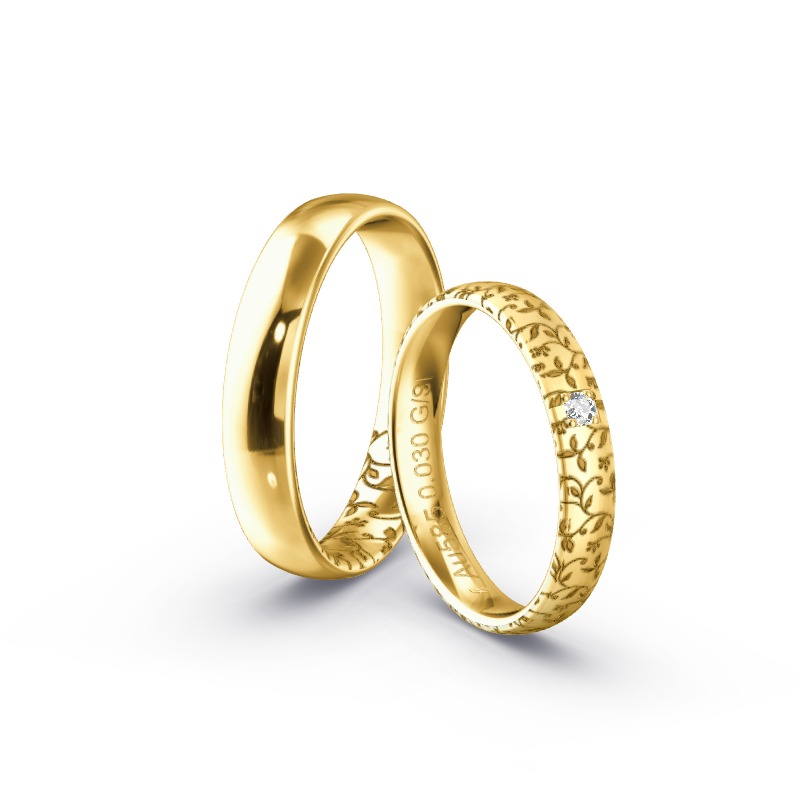
① 585 yellow gold
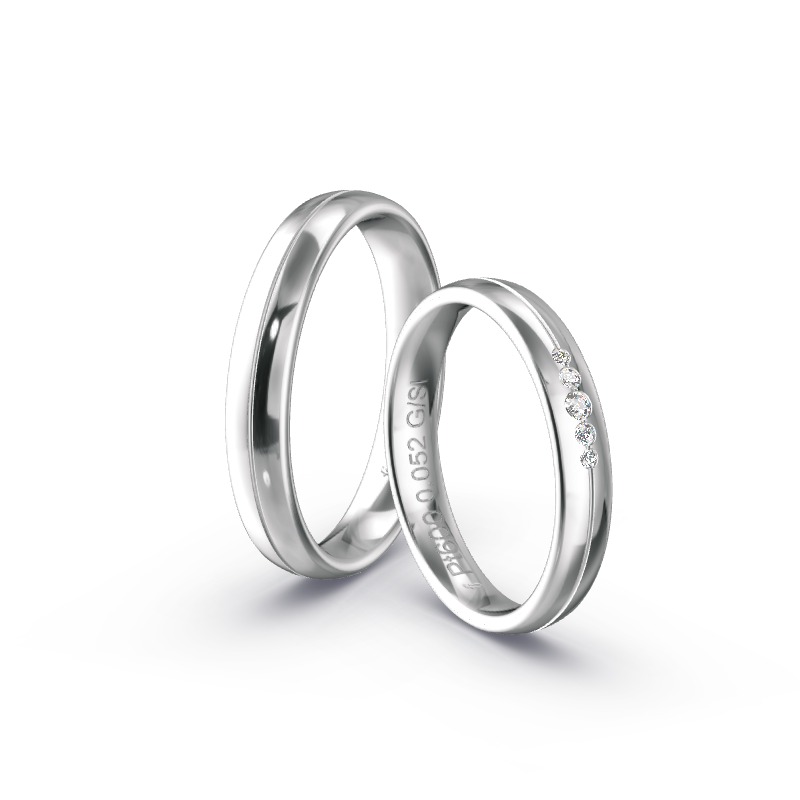
② Platinum 600
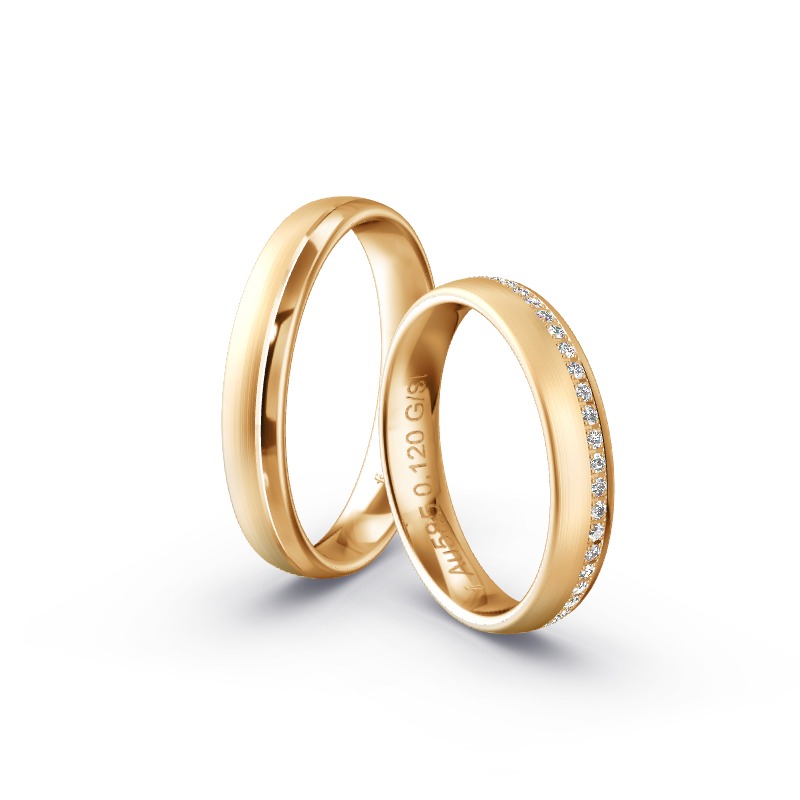
③ Apricot 585
This is no coincidence. Gold has made a comeback in society—as a topic, a symbol, and a promise of value. When people think of gold, they think of yellow gold. Platinum 600 holds second place. Apricot 585, an exclusive warm rose-gold alloy, follows in third place.
The perfect wedding band: 4 mm, sizes 54 and 61
The most popular ring width in Germany is 4 mm. Wide enough to make a statement, narrow enough to never get in the way. The profile is almost always comfortably domed, with a rounded interior. Profile C is the clear number one: gently domed on the outside, rounded on the inside for all-day comfort.
Polished or Satin Finish—A Matter of Character
The finish of a wedding ring says something about the person who wears it. Polished is the most popular finish —a classic high-gloss look that is simple and timeless. A fine matte finish comes in second place: a silky, subtly subdued appearance that refracts light differently. Third place goes to the “bark” finish, demonstrating that appreciation for handcrafted, unique finishes is on the rise again.
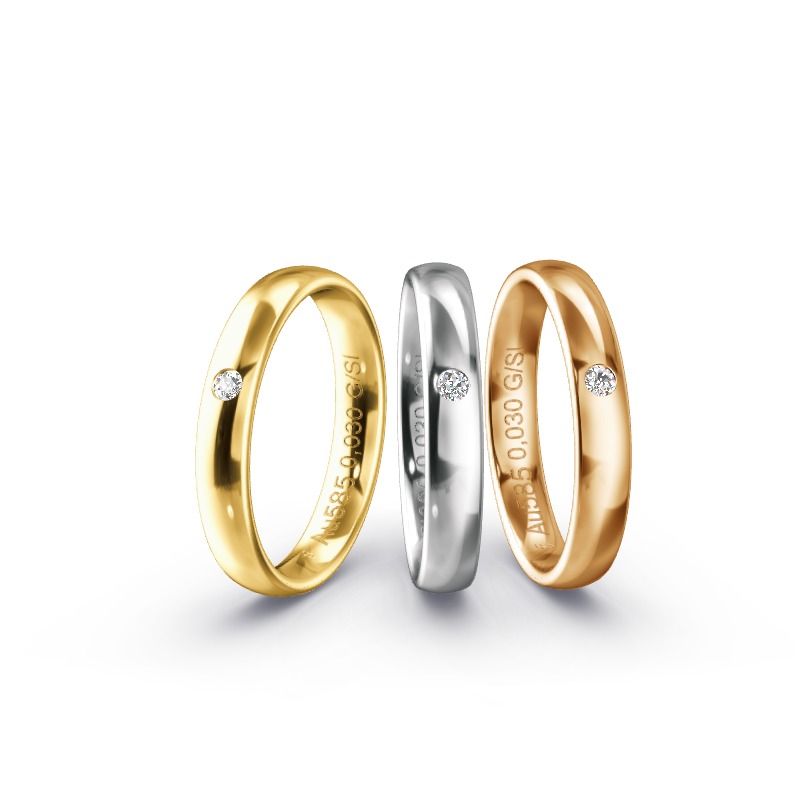
Classic high-gloss finish. Simple, clean, timeless. It fully reflects light and gives the ring maximum brilliance.
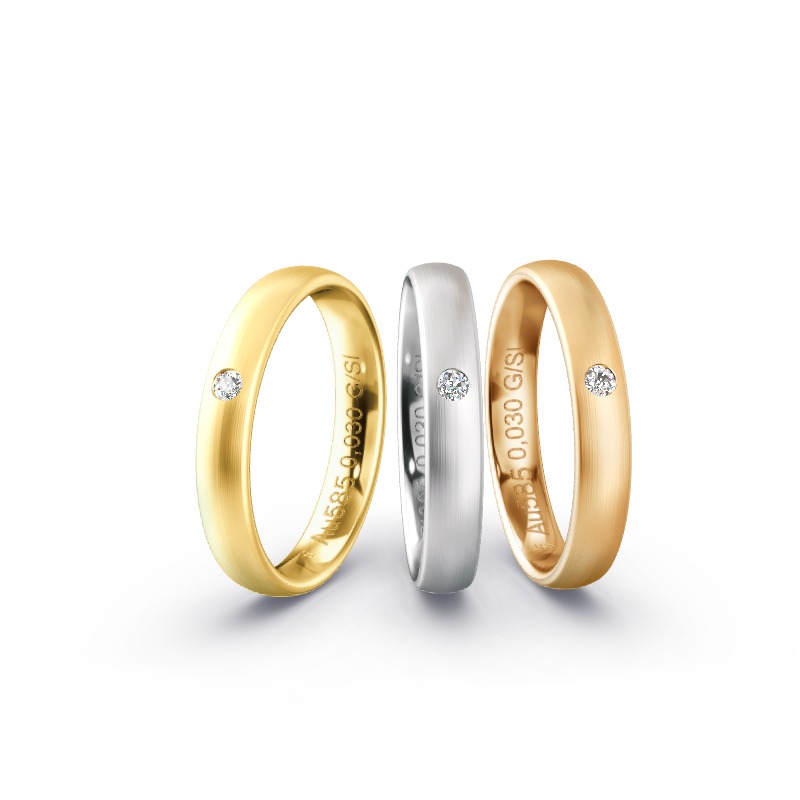
Silky, muted, modern. It diffuses light more softly and shows fewer signs of wear in everyday use.
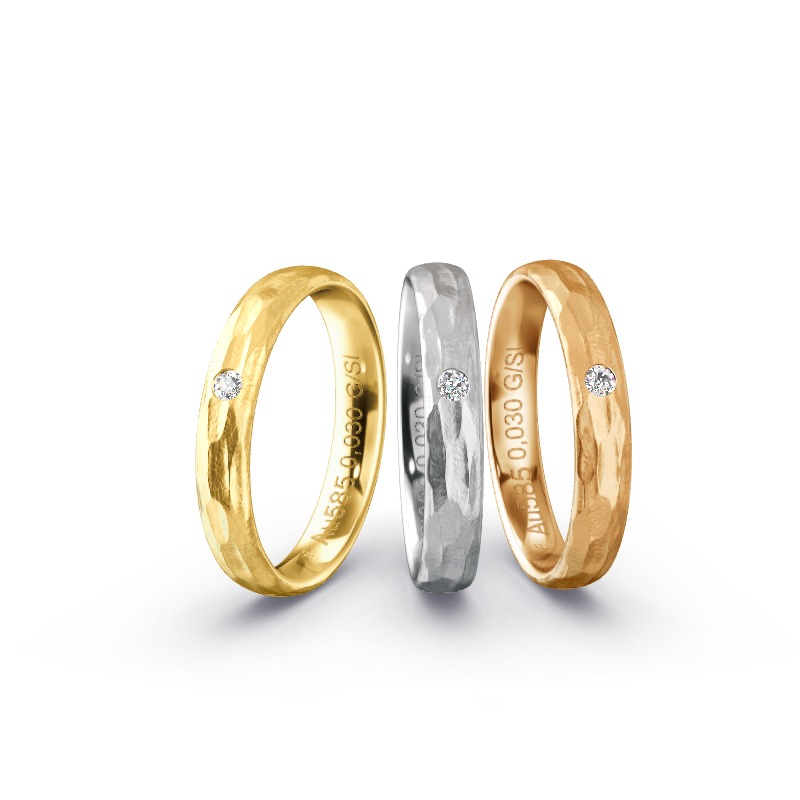
Organically structured, with a natural character. For anyone who consciously seeks out the unusual.
Solid Color: The Clear Choice for 91 Percent
91 percent of all wedding rings in Germany are solid-colored. Our couples love a simple base that can be personalized through the finish, gemstone settings, and design elements.
Two-color combinations do exist, but they are the exception in 2026.
An average of five diamonds
For women’s rings, diamond setting is no longer an optional upgrade. On average, 5 diamonds are set, either in a classic bezel setting or in a delicate cut. Most couples continue to choose natural diamonds for their wedding rings, but lab-grown alternatives are gaining popularity in 2026 as well.
90 percent of all couples who buy wedding rings have their rings engraved
90 percent of the wedding rings at Fischer are engraved. The most common combination is text and a symbol together—a date, a name, or a symbol that only the two people involved truly know. A message that speaks to the heart, invisible to everyone except the wearer.
Nevertheless, we are constantly able to create special engravings: from fingerprints to small drawings or signatures, there are no limits to creativity.
Three months before the wedding—the window of opportunity to make a decision
Most couples order their wedding rings about three months before the wedding. Some do it earlier, while others wait until the last few weeks. This three-month window is the period during which a vague idea turns into a concrete decision.
What these figures mean taken together
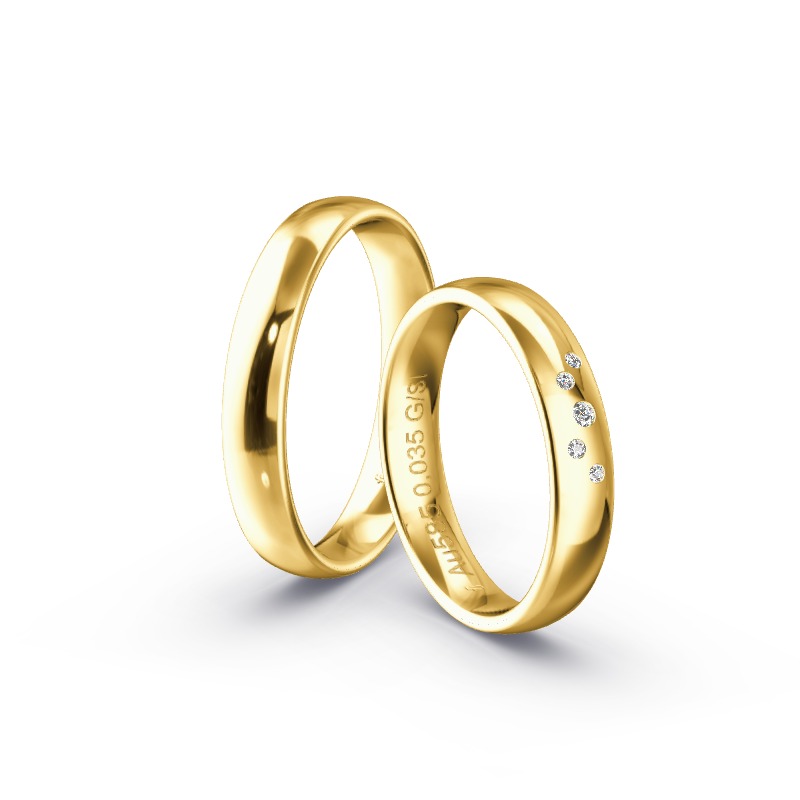
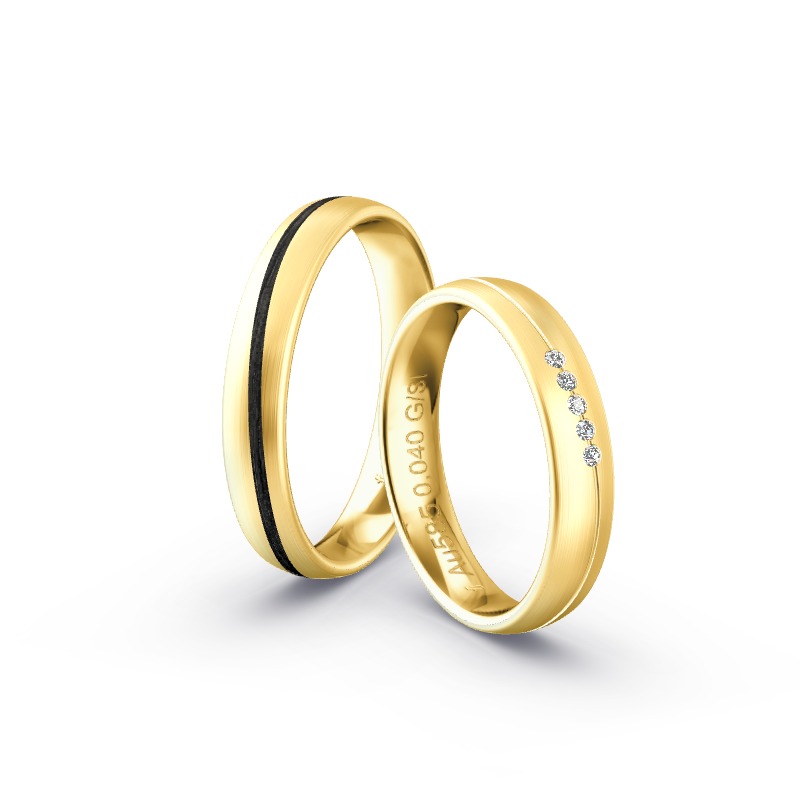
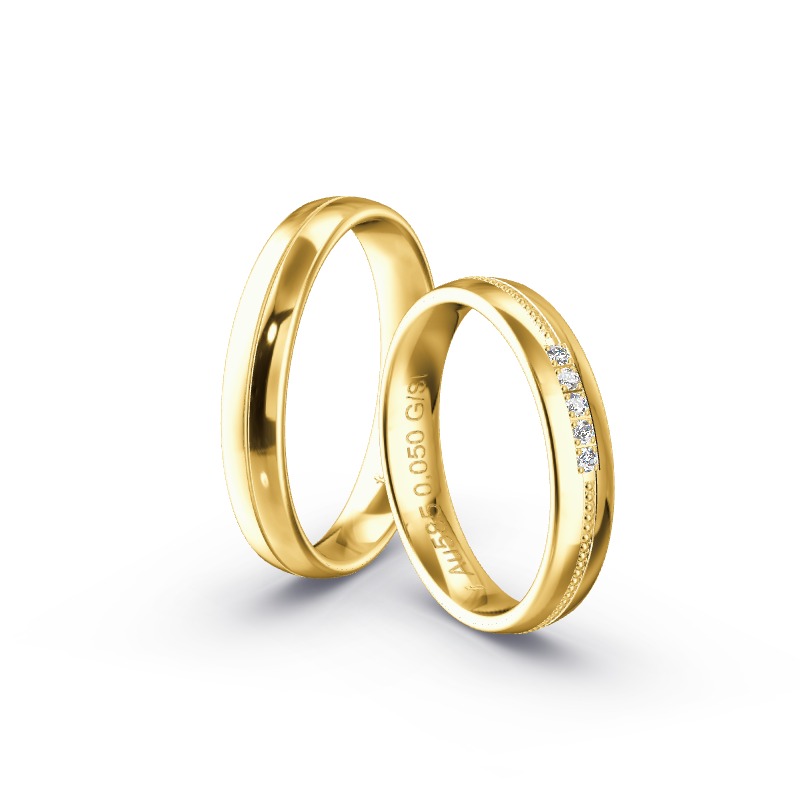
The most popular wedding band in Germany in 2026 is 4 mm wide, made of 585 yellow gold, polished or with a fine matte finish, featuring a comfortable C-profile, set with an average of five diamonds on the women’s band—and engraved on the inside with a message meant only for the two of them.
The vast majority of these rings were customized by the couples themselves—using the Fischer Wedding Ring Configurator. Now it’s up to you: Customize your own rings and see if you’re following the trend or breaking new ground as a trendsetter.
Data source: Thousands of actual wedding ring orders, Germany, order period January 1, 2025, through December 31, 2025. Data collected on a couple-by-couple basis.
Frequently Asked Questions About Buying Wedding Rings in Germany
Which wedding ring alloy will be the most popular in Germany in 2026?
585 yellow gold is the most popular alloy for wedding rings in Germany. It has displaced 585 apricot gold from the top spot and is leading the rankings for the first time in years. Platinum 600 and 585 apricot gold follow in second and third place, respectively.
What is the most common ring width for wedding bands?
The most popular width for wedding bands in Germany is 4 mm. The average ring size is 54 for women and 61 for men.
Polished or Satin Finish—Which Wedding Band Finish Is More Popular?
Polished is the most popular finish, followed by fine matte in second place. Natural finish comes in third.
How many wedding rings are engraved?
9 out of 10 wedding rings—about 90 percent—are engraved. The most common combination is text and a symbol together, such as a date paired with a personal symbol.
When should you order your wedding ring?
The average time to place an order is three months before the wedding.
How many diamonds are there in an average women's engagement ring?
The average women's ring at Fischer is set with 5 diamonds. Diamond settings are no longer an optional extra, but rather a common expectation for women's rings.
Do couples choose single-color or two-color wedding rings?
91 percent of all wedding rings are single-colored. Two-tone designs account for less than 10 percent of orders.
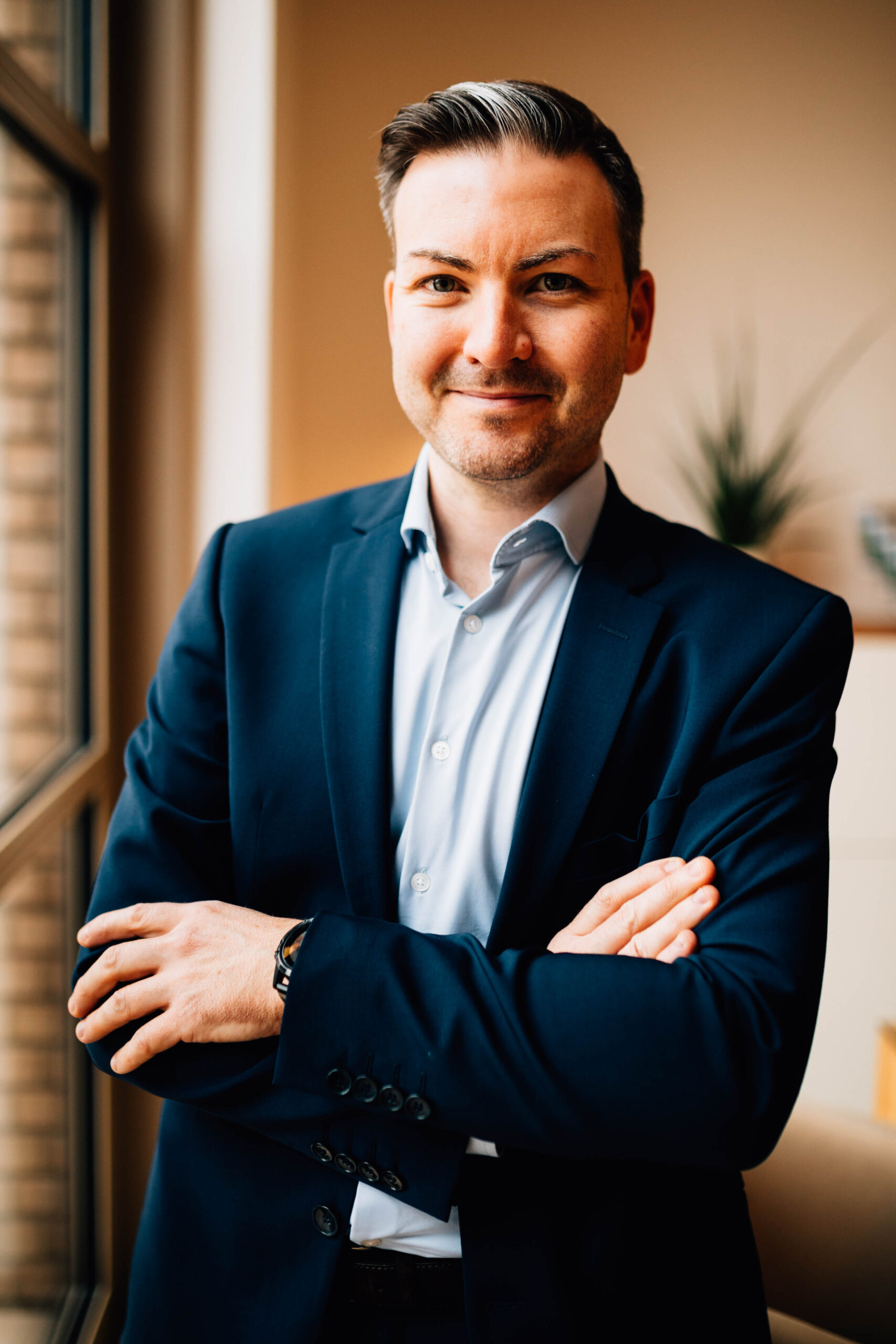
Sebastian Fischer is a fifth-generation member of the executive board. For him, analyzing actual order data is a key tool for understanding what couples really want today.