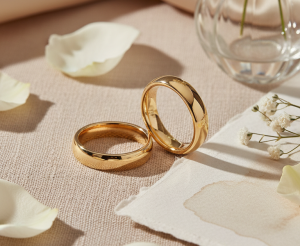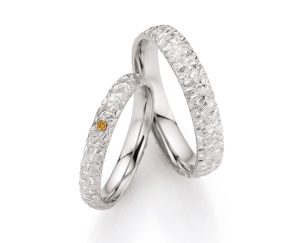


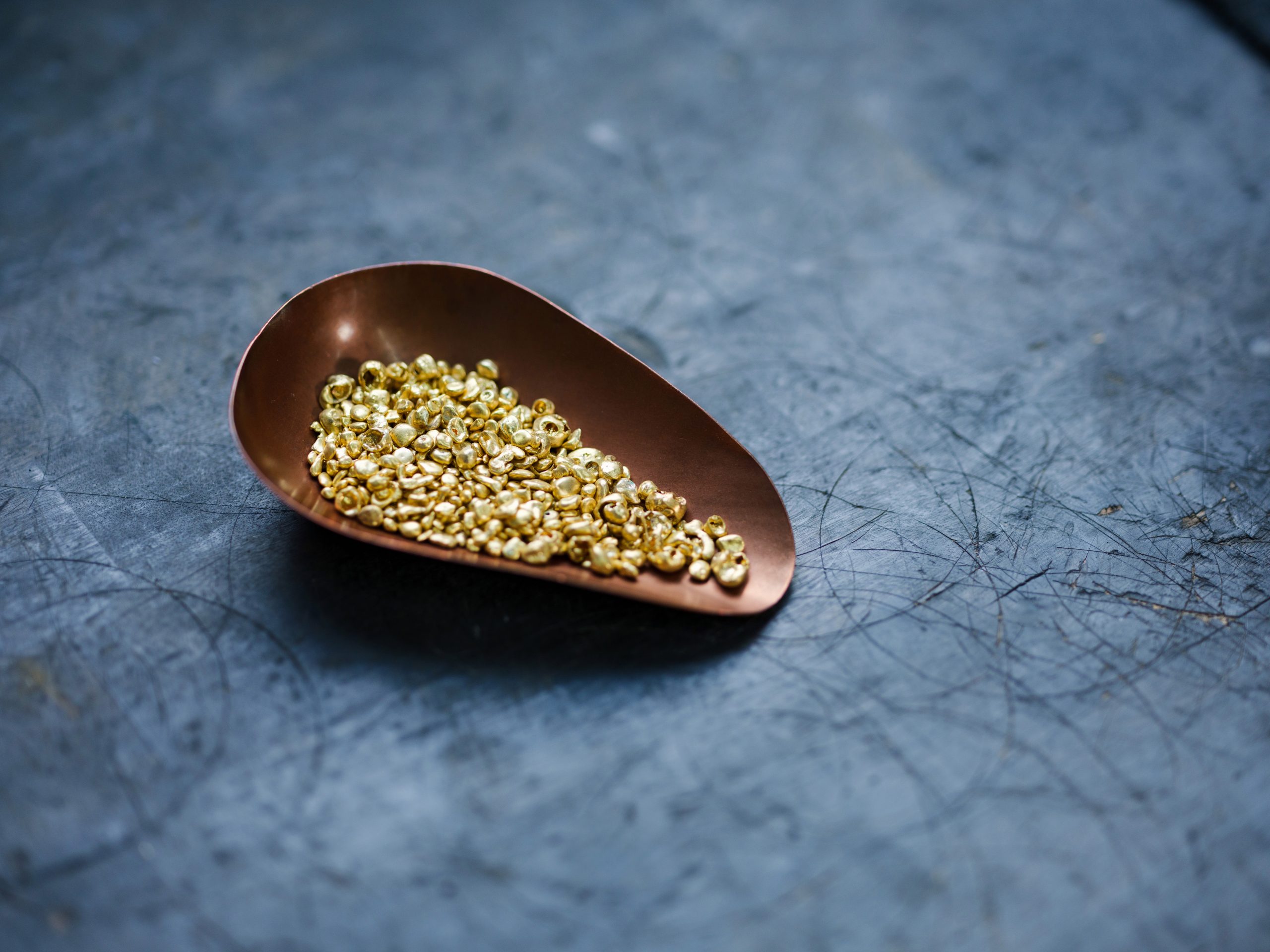
When choosing your wedding rings, you should consider the composition, properties and advantages of both gold alloys. 585 gold is known for its durability and resilience, while 750 gold is prized for its high purity and particularly noble hue. Many bridal couples wonder whether 750 gold is too soft for wedding rings - but this is a myth. Although pure fine gold is softer, modern processing techniques and precise alloys at Fischer ensure that hardness and resistance are optimally balanced. The addition of selected metals such as palladium or copper ensures that rings made from 750 gold are also extremely stable and scratch-resistant. This allows you to benefit from the luxurious radiance and high fine gold content of this alloy - without compromising the suitability of your wedding rings for everyday wear.
Understanding the world of gold alloys
Alloying gold with other metals
Alloying gold with other metals significantly improves its properties. Gold alloys are of great importance for the manufacture of jewelry.
Why pure gold is rarely used
Pure gold is not ideal for making jewelry due to its softness. It is too pliable and can be easily damaged.
Stability and durability
The addition of metals such as silver, copper and zinc makes gold more resistant. This makes it suitable for everyday use.
Color variations due to different alloying elements
Different alloying elements can influence the color of gold. For example, copper produces a rose gold color, while silver and palladium result in white gold.
What do the numbers 585 and 750 mean?
When buying gold jewelry, we often come across the numbers 375, 585 and 750 - but what do they actually mean? These numbers are crucial for assessing the quality and value of gold jewelry.
The carat weight and its significance
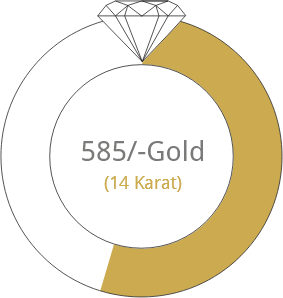
The carat weight is a measure of the proportion of gold in an alloy. Pure gold has 24 carats. The numbers 585 and 750 indicate how much gold is contained in the alloy.
Conversion in percent:
585 = 58.5 % gold
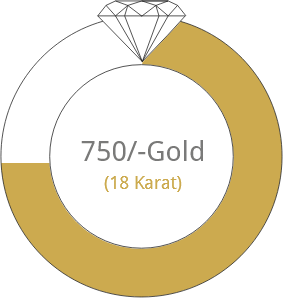
750 = 75 % gold
The number 585 means that the alloy contains 58.5% gold, while 750 stands for 75% gold. This information is important for assessing the quality of gold jewelry.
International standards and assay marks
The numbers 585 and 750 correspond to international standards for gold alloys.
They are confirmed by assay marks that guarantee the purity of the gold.
There are some important aspects to consider - such as the origin of the gold, the processing and the respective labeling by the manufacturer.
585 gold in detail
The 585 gold alloy offers an optimal balance between purity and durability.
It is one of the most popular alloys for jewelry, especially for wedding rings, as it combines an excellent price-performance ratio and high robustness.
Composition and typical alloying elements
585 Gold consists of 58.5 % gold and is alloyed with metals such as silver, copper and zinc to increase its strength and durability. The exact composition may vary slightly depending on the manufacturer and the desired color tone.
Physical properties and durability
The addition of other metals gives 585 gold greater strength than pure gold.
It is less susceptible to scratches and retains its shape even when worn regularly - ideal for jewelry that is intended to last in everyday life.
Advantages of 585 gold
Price-performance ratio: 585 gold offers an excellent balance between quality and price. It combines a noble appearance with economic sense.
Robustness in everyday life: The high resistance makes 585 gold perfect for pieces of jewelry that are worn every day - especially for wedding rings.
Disadvantages of 585 gold
One disadvantage of 585 gold is that it is not as pure as 750 gold or higher alloyed variants. As a result, the coloring is somewhat less intense and warm. Nevertheless, 585 gold impresses with its longevity, stability and excellent price-performance ratio
750 gold in detail
The 750 gold alloy offers a unique combination of lasting value, noble color brilliance and timeless elegance, which makes it a popular choice for high-quality jewelry - especially for wedding rings.
Composition and typical alloying elements
750 Gold consists of 75% pure gold and is alloyed with metals such as silver, copper and zinc in order to specifically influence hardness, color and workability.
Typical alloying elements:
Silver: Improves ductility (malleability) and influences the color tone.
Copper: Increases strength and gives the gold a warm, reddish shimmer.
Zinc: Acts as a deoxidizing agent and stabilizes color and strength.
Durability and scratch resistance in comparison
It is often assumed that 750 gold is automatically softer and more scratch-sensitive than 585 gold due to its higher gold content - but this is not the case with wedding rings. Thanks to modern manufacturing processes with cold forming, the material structure is compacted, resulting in high hardness and excellent resistance.
750 wedding rings are just as robust and durable as rings made of 585 gold, but offer the advantage of a more intense color and higher value.
Physical properties and durability
750 gold impresses with its excellent corrosion resistance and long-lasting shine. It is dimensionally stable in everyday use, abrasion-resistant and retains its brilliance for many years - a quality feature that is particularly appreciated in wedding rings.
Advantages of 750 gold
Higher gold content and stable value: The high gold content ensures excellent value stability and makes 750 gold an attractive, long-term investment.
Brilliance and color intensity: 750 gold is characterized by a particularly deep, warm color and noble brilliance - ideal for couples who value a luxurious look.
Disadvantages of 750 gold
One disadvantage of 750 gold is the higher price compared to 585 gold. However, the quality, durability and exclusive color effect justify the added value - especially for wedding rings that will be worn for a lifetime.
375 gold - why it is less suitable for wedding rings
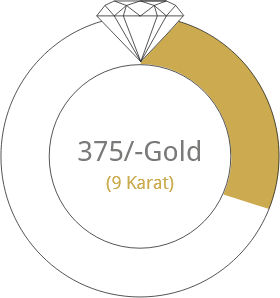
375 gold, also known as 9 carat gold, consists of 37.5% pure gold and 62.5% other metals such as silver, copper or zinc. This high admixture ensures a significantly lower price - but also leads to noticeable differences in color, shine and durability compared to higher alloyed gold types.
Advantages of 375 gold
Favorable price:
Due to the low gold content, 375 gold is particularly inexpensive and therefore attractive for price-conscious buyers.
Disadvantages of 375 gold
Low color depth: The low gold content results in a duller, slightly yellowish-grey color, which appears less warm and noble than 585 or 750 gold.
Less durable: The surface may tarnish or discolor over time, especially with regular skin contact or exposure to moisture.
More susceptible to material defects: Due to the high proportion of other metals, 375 gold is mechanically less stable. The material can be more brittle, which is particularly problematic for delicate pieces of jewelry or settings - diamonds or gemstones set in 375 gold can also be damaged or loosened more easily as a result.
Lower value retention: 375 gold has a significantly lower material and resale value compared to 585 or 750 gold.
Recommendation for practice
For wedding rings that are to be worn for a lifetime, 375 gold is not the first choice.
It is more suitable for costume jewelry or pieces of jewelry that are worn less frequently, where price and appearance are paramount - but not for daily wear and lasting durability.
Making the right decision: 585 vs. 750 gold
The choice between 585 and 750 gold depends on various factors. Both alloys have their individual advantages and characteristics, which should be taken into account when making a decision.
Direct comparison of the most important properties
A direct comparison shows clear differences in terms of gold content, color, durability and price. While 585 gold consists of 58.5 % fine gold, 750 gold contains 75 % pure gold. The higher gold content gives 750 gold a more intense color brilliance and a higher material value.
The most important differences at a glance:
Gold content: 58.5 % for 585 gold | 75 % for 750 gold
Price: 585 gold tends to be cheaper than 750 gold, but the color effect of 750 gold is warmer and richer in tone, while 585 gold is somewhat lighter and more subtle
Price differences and long-term value development
The price difference between 585 and 750 gold can be significant. The higher gold content of 750 gold is directly reflected in the material price. In the long term, however, 750 gold tends to retain a more stable value, as it contains a higher proportion of fine gold and is in greater demand internationally.
Factors that influence value development:
- The current gold price
- The demand for high-quality gold jewelry
- The workmanship and quality of the jewelry
- The emotional and material value of a wedding ring over time
The gold range atFischer Trauringe
At Fischer Trauringe you will find a comprehensive selection of gold alloys to suit your individual requirements. Whether 375, 585 or 750 gold - our collection offers the right material for every taste and every requirement.
Quality standards and certifications
At Fischer Trauringe, we attach great importance to quality and authenticity. Our gold alloys undergo rigorous testing and are certified accordingly to guarantee you the highest level of safety and transparency.